
 English
 Russian
 Thai
 Korean
 Chinese
 Japanese
 Vietnamese
 Malay
 Tamil
 Turkish
 Arabic
 Portuguese
 Indonesian
 French
 Spanish
Plastic Pipe Shredder Introduction
The use of plastic pipe shredders has become a key solution in the field of sustainable waste management, especially for processing high-density polyethylene (HDPE) and polyvinyl chloride (PVC) pipes. These industrial shredders or crushers provide an efficient and environmentally friendly method for recycling in industries such as pipelines, construction, and oil and gas.
There are usually three ways to deal with waste plastic pipes: reprocessing and recycling, incineration, and landfill. Among these three methods, incineration and landfill will cause pollution to the human living environment. Reprocessing and recycling plastic pipes is the most worthy of promotion and adoption.
Reprocessing and recycling plastic pipes includes converting waste plastic pipes into renewable particles or plates through crushing, cleaning, melting and other steps, and then using them to produce new plastic products. The plastic pipe shredder will play a role in improving processing efficiency and effectively crushing plastic pipes in the crushing process.

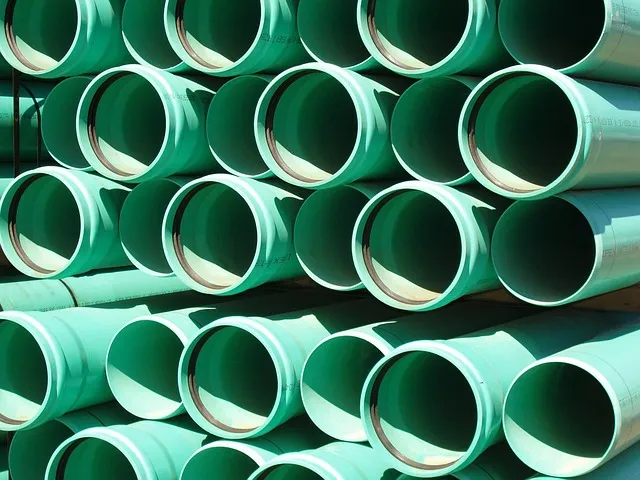
Types of Plastic Pipe Shredder
Pipe Horizontal Shredder
The horizontal plastic pipe shredder is designed to effectively crush longer and thicker plastic pipes.
Advantages
The horizontal plastic pipe shredder has a wide inlet, which allows it to accommodate longer and thicker plastic pipes, reducing the workflow of cutting plastic pipes, saving time and saving the material handling cost of cutting.
Disadvantages
Due to the horizontal design, horizontal plastic pipe shredders usually take up more space than vertical shredders. In addition, since the horizontal plastic pipe shredder feeds in a horizontal direction, it lacks the help of gravity compared to the vertical shredder, so additional power is needed to assist the feeding, such as manual feeding or mechanical assistance.
Single Shaft Pipe Shredder
Single-shaft pipe shredders are indeed very suitable for shredding small pipes and meeting fine shredding needs.
Advantages
Compared with large industrial shredders, single-shaft pipe shredders consume less electricity and reduce operating costs.
While single-shaft pipe shredders are good at shredding small pipes, they are also versatile machines that can shred a variety of other materials, such as plastic barrels, plastic bottles, plastic films, etc.
Disadvantages
Single-shaft pipe shredders are limited in capacity and are not suitable for processing large amounts of material or thicker pipes. Compared with large industrial shredders, single-shaft pipe shredders have relatively slow processing speeds.
Four Shaft Plastic Pipe Shredder
Four-shaft plastic pipe shredders are very suitable for shredding large rigid plastic pipes and other large materials.
Advantages
The four-shaft design of the four-shaft plastic pipe shredder ensures uniform shredding of plastic pipes and other materials, resulting in consistent particle size.
The shredder’s multiple shafts and cutting blades help minimize the risk of material jams by evenly distributing the cutting force.
The 4-axis plastic pipe shredder is versatile and can handle a variety of other bulky materials, such as plastic barrels, containers, pallets, etc., in addition to plastic pipes.
Disadvantages
The advanced design and sturdy construction of the 4-axis plastic pipe shredder make it more expensive than a simpler shredder. In addition, it consumes relatively more energy due to the more power required.
Plastic Pipe Crusher
The crushing chamber of the plastic pipe crusher is designed at a fixed angle to the horizontal feed hopper, making it suitable for crushing long pipes.
Advantages
Due to the fixed-angle design, it is easier for the operator to feed long pipes into the crusher. This simplifies the operation of the crusher and reduces the need for manual intervention, thereby improving productivity and safety.
Disadvantages
The fixed-angle design may limit the types and sizes of pipes that can be effectively crushed. Pipes with different diameters or shapes may not fit into the fixed-angle crushing chamber, reducing the versatility of the crusher.
Why does the reprocessing of discarded plastic pipes require a shredder?
As mentioned above, the reprocessing of plastic pipes involves a melting step. Plastic pipes are usually large and bulky. If they are melted directly, the process will be very long and there may be uneven melting.
The fragments of discarded plastic pipes obtained by shredder increase the contact between the surface area and the heat source during the melting process, which can achieve a more efficient and uniform melting effect, improve energy efficiency, and reduce recycling costs.
In addition, the melting process of plastics usually uses an extruder or injection molding machine. Large plastic pipes are difficult to feed, while plastic pipe fragments are easier to transport and easier to feed into the melting equipment.
Before the waste plastic pipes are melted, it is necessary to remove possible impurities to ensure the purity and quality of the recycled materials.
Through the shredder shredding, other substances hidden in the plastic pipes, such as metal connectors, accessories or reinforcements, can be exposed so that they can be easily identified and extracted in the subsequent sorting and separation process. Once the metal parts are exposed by shredding, they can be sorted and separated from the shredded plastic fragments using various technologies (such as magnetic separation, eddy current separation or manual sorting).


