Vietnamese
 English
 Russian
 Thai
 Korean
 Chinese
 Japanese
 Malay
 Tamil
 Turkish
 Arabic
 Portuguese
 Indonesian
 French
 Spanish
Metal shredding is the backbone of efficient metal recycling — breaking down bulky scrap (from cans and drums to car bodies and steel beams) into smaller, manageable pieces. This not only reduces volume and simplifies transport, but also enables downstream processes like sorting, separation, and melting. This guide describes how to shred metal effectively, the types of metal shredding machines used, etc.
What Machines Are Used to Shred Metal?
Depending on the type of scrap metal and desired output size, different shredders and size-reduction technologies are used. Typical machines include:
Double-Shaft Scrap Metal Shredder (Standard / Heavy-Duty)
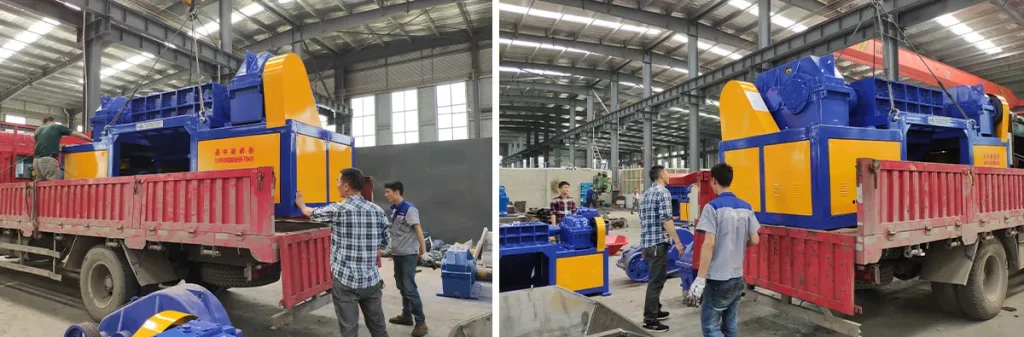
Many modern scrap metal recycling operations rely on robust twin-shaft shredders, where two counter-rotating shafts fitted with heavy-duty cutters or hammers shear, tear, and compress metal scrap. They are equipped with two heavy-duty counter-rotating shafts with high-torque blades designed to shear, tear and compress tougher metal scrap.
Commonly used for medium to bulky scrap: steel scrap, metal containers, industrial scrap, mixed metal waste, etc.
Features: rugged construction, high torque & low-speed operation to maximize blade life and reduce dust/noise.

Small Double-Shaft (Twin-Shaft) Scrap Metal Shredder
Compact yet robust, this shredder features two parallel rotating shafts with interlocking blades.
Best suited for lighter or smaller metal waste: metal packaging, cans, small containers, old HDDs, wiring, small scrap pieces, thin sheet metal, etc.
Advantages: energy-efficient, lower maintenance, easier to operate, minimal footprint.

Four-Shaft Scrap Metal Shredder
It features a more complex design with four interlocking shafts, providing multi-stage cutting and finer, more uniform shredding.
Suitable for mixed, complex scrap materials — where a combination of bulky and smaller scrap needs consistent output size and thorough shredding.

Hammer Mills
It reduces material size by high-speed impact. A rotor spins at high speed and carries a number of hardened steel hammers (fixed or free-swinging).
It’s best for non-ferrous scrap, light gauge metal, cable/wiring, castings, aluminum swarfs and turnings, and electronic housings.
Features: Produces relatively small, uniform fragments and flexible sizing via screens. However, it’s not ideal for very thick, solid steel blocks or massive structural pieces.
Modular / Custom Shredder Configurations
Some metal shredder manufacturer support customization service according to your feedstock — e.g. mixed metals, car frames, appliances, or light scrap — you may choose a shredder with customizable chamber design, rotor geometry, blade/hammers, and discharge screens to optimize performance.
Step-by-Step: How to Shred Metal
Here’s a recommended workflow depending on what you are shredding:
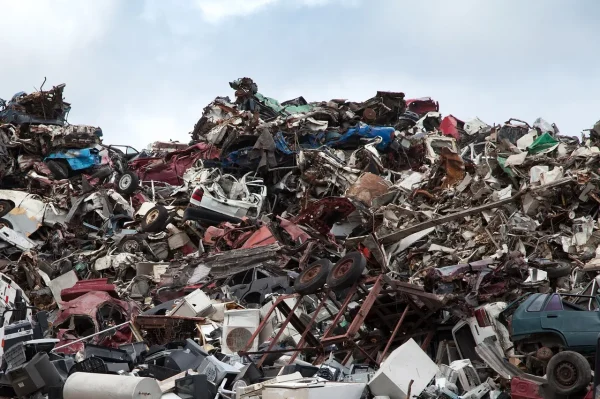
Step1: Identify the Scrap Type & Volume
For small scrap (cans, metal packaging, small containers, light sheet, metal housings), use small double-shaft shredder.
For general industrial scrap, mixed metal, containers, steel scrap, metal drums, moderate-sized waste, use standard double-shaft shredder.
For complex, mixed scrap (varied sizes, mixed metal types, scrap from different sources) and if you need consistent shredded output, consider four-shaft shredder.
For heavy items (steel bars, structural pieces, bulky scrap), standard or heavy-duty double-shaft (or custom heavy-duty configurations) are generally most appropriate.
Step2: Feed & Hopper Preparation
Feed the pre-sorted scrap into a robust hopper or feeding system (conveyor, hydraulic ram, or batch feed) suitable for your shredder. The feed system should handle bulky, irregular scrap, and provide steady flow into the cutting chamber.
Step3: Primary Size Reduction – Shredding / Hammering / Shearing
Once inside the shredding chamber, heavy-duty cutters or hammers engage the scrap to tear, shear, and break it. In dual-shaft shredders, interlocking cutters or hammer-tips tear apart scrap through a combination of shear, compressive, and tensile forces.
Motor design in metal shredders typically emphasizes low speed and high torque to maximize cutting force and reduce wear. This helps process dense materials effectively while controlling stress on components.

Step4: Screening & Size Separation
After shredding, the fragments pass through a screen or grate (mesh or grate plates in the discharge system) that separates properly sized metal pieces from larger chunks that may need further shredding. Oversized pieces get returned to shredding while acceptable-sized fragments pass through.Four-shaft shredders are commonly used for secondary shredding tasks.
Step5: Separation & Sorting of Metal Types and Contaminants
After size-reduction, it’s often necessary to separate ferrous metals from non-ferrous metals, and to remove any non-metallic contaminants (plastics, rubber, glass, insulation, etc.). Typical separation methods include:
- Magnetic separation — to pull out ferrous metals (steel, iron).
- Eddy-current separation or other non-ferrous metal separators — to recover aluminum, copper, and other non-ferrous metals.
- Thorough separation improves metal purity, increases downstream metal value, and reduces environmental hazards.
Key Considerations Before Shredding Metal
Several important factors must be evaluated to ensure safe and efficient metal shredding. The first is understanding the type of metal being processed, because different metals respond very differently to impact and shear forces. Ferrous materials like steel and iron require extremely high torque and structural strength, while softer non-ferrous metals such as aluminum or copper may require more controlled cutting to avoid deformation. The metal’s thickness, hardness, and overall geometry also influence machine stress and throughput.
Another major consideration is the desired output size, which directly determines the machine selection. Dual-shaft shredders are ideal for coarse reduction, four-shaft shredders are chosen when a stable and uniform output is needed, and hammer mills are used when fine particle size is required. Selecting the wrong machine for the intended output can lead to poor efficiency, excessive wear, and frequent blockages.
Blade material and wear resistance need to be considered because of the severe of metal abrasion. Hardened tool steel cutters, replaceable wear plates, and reinforced shaft protection help extend the machine’s lifespan. Feeding method is equally important—using conveyors, grabbers, or loaders ensures a stable, controlled flow of scrap, reducing shock loads on the shredding chamber.
Finally, safety and environmental considerations must be addressed. Metal shredding can generate sparks, dust, noise, and vibration, so proper enclosures, dust collectors, fire-prevention systems, and magnetic separators should be integrated into the system. Downstream equipment such as eddy-current separators or hammer mills may also be required to achieve complete material separation and the highest recycling value.
About Us – Shengzhong Shredder
Shengzhong is a leading manufacturer of industrial shredding and recycling equipment, specializing in heavy-duty solutions for metal, plastic, rubber, wood, and other solid waste streams. With years of engineering expertise and a strong focus on durability, safety, and performance, we develop shredders that meet the demanding requirements of global recycling and waste-management industries.
Our product range includes single shaft shredders, dual-shaft shredders, four shaft shredders, small double shaft shredders and complete recycling systems designed for efficient material reduction and long-term reliability. Every machine is built with high-strength components, wear-resistant cutting tools, and advanced control systems to ensure stable operation under the toughest conditions.
Contact us for comprehensive shredding solutions!