
 Tamil
 English
 Russian
 Thai
 Korean
 Chinese
 Japanese
 Vietnamese
 Malay
 Turkish
 Arabic
 Portuguese
 Indonesian
 French
 Spanish
In the recycling industry, efficient material processing is both an environmental and economic necessity. As a technology-driven manufacturing enterprise, Shengzhong Heavy Industry Machinery designs advanced size-reduction solutions for global operations. At the core of this infrastructure is the waste plastic shredder—an indispensable tool for transforming bulky, tough polymer scrap into valuable, manageable raw materials.
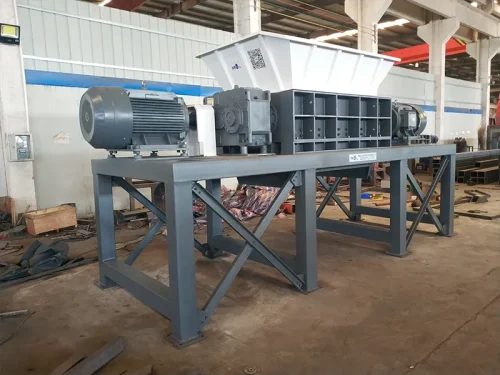
1. What Is a Waste Plastic Shredder?
A waste plastic shredder is a heavy-duty industrial machine used to reduce the size of bulky plastic waste into manageable, uniform pieces. It serves as the critical first-stage infrastructure in plastic recycling, size reduction, volume minimization, and preprocessing lines. By breaking down large or dense plastic scrap, it prepares the material for downstream washing, sorting, and pelletizing (re-granulation).
Beyond standard recycling plants, these machines play a vital role in waste-to-energy facilities and industrial manufacturing by converting bulky scrap into high-density feedstock.
Common Materials Processed:
- Hollow Containers: PET bottles, HDPE milk jugs, chemical drums, and buckets.
- Profiles & Pipes: Thick-walled PVC pipes, conduit, and PE tubes.
- Flexible Plastics: Agricultural films, PP woven bags, and stretch wraps.
- Engineering & Rigid Plastics: Injection-molded purgings, car bumpers, dashboards, and electronic enclosures (WEEE).
- Challenging Feedstock: Mixed, heavily contaminated, or bundled municipal plastic waste.



2. Working Principle of a Waste Plastic Shredder
A waste plastic shredder relies on low-speed, high-torque mechanical action to overcome the structural integrity of tough polymers.
Material enters the hopper and meets engineered shafts equipped with specialized cutting blades. Driven by a powerful motor and gearbox, the shafts rotate to draw material into the cutting chamber. The plastic is reduced via continuous tearing, squeezing, and shearing forces between the rotating blades and fixed counter-knives.
To protect the drive system, an intelligent PLC monitors motor load in real time. Upon detecting an unshreddable object or overload, the shafts automatically stop and reverse to clear the chamber before resuming operation. Once the material is smaller than the screen mesh openings, it discharges to the collection system.
3. Common Types of Waste Plastic Shredders and Applicable Materials
Selecting the right machine configuration depends entirely on the physical characteristics of your waste stream. Shengzhong Heavy Industry Machinery offers a versatile lineup tailored to specific industrial demands.

- How it Works: Features a single high-strength rotor lined with bolted, staggered knives. A hydraulic ram forces the bulk plastic against the low-speed rotating shaft, where the material is sheared against a fixed bed blade until it passes through an adjustable screen.
- Key Characteristics: Robust heavy-duty construction with a thick steel frame and housing. Features high-strength cutting knives bolted in a staggered pattern, a powerful hydraulic pusher for consistent feeding under load, and an adjustable discharge screen to control final output size.
- Best For: Solid industrial scrap, thick-walled plastic pipes, purging lumps, wood, and municipal solid waste.

- How it Works: Utilizes two counter-rotating shafts with interlocking serrated blades. The shafts rotate slowly inward to pull, tear, and shear the plastic apart without the need for a hydraulic pusher.
- Key Characteristics: Heavy-duty construction built on a massive frame. It operates at low speed with very high torque, maximizing reduction efficiency while minimizing noise and energy waste. The counter-rotating rollers provide a self-cleaning action that prevents sticky or fibrous materials from clogging.
- Best For: Bulk items like plastic drums, car bumpers, waste tires, electronic waste (WEEE), pallets, and large baled materials.

- How it Works: Material enters the hopper and meets four rotating shafts with interlocking blades. This setup creates a multi-angle, scissor-like cutting action. High mechanical friction and shear forces rapidly crush the plastic until it passes through the bottom screen.
- Key Characteristics: High throughput and superior energy efficiency. It delivers a highly uniform, fine output size (often <100mm) in a single pass due to its two-stage cutting action and integrated sizing screen.
- Best For: Bulky, tough plastics, electronic scrap, plastic containers, pallets, metal drums, and heavy industrial waste streams.

- How it Works: Material is fed into two counter-rotating shafts. Rotor blades work with serrated fixed knives to pulverize plastic with minimal power. An intelligent PLC monitors the load; upon detecting an overload or foreign object, the rotors automatically stop and reverse.
- Key Characteristics: Dust-free, quiet operation with automatic jam reversal. It is designed for localized, low-volume shredding where space is limited but high-security destruction or localized recycling is required.
- Best For: Mini-industrial facilities processing small packaging scraps, retail backrooms, schools, and secure commercial document or plastic card destruction.

- How it Works: Unlike slow-speed shredders, a crusher utilizes a high-speed rotor equipped with sharp blades that impact and slice plastic waste rapidly against a stator knife until the granulated flakes pass through a fine bottom screen.
- Key Characteristics: High-speed cutting that yields small, fine regrind. Built with heavy welded steel frames and high-wear-resistant steel blades (HSS or carbide). Equipped with rapid-access designs for easy blade maintenance and safety interlocks.
- Best For: Clean, uniform plastic scrap streams, injection molding sprues and runners, blow-molded PET bottles, and thin PVC pipes.
4. How to Choose the Right Waste Plastic Shredder
Investing in the correct machinery prevents premature wear, maximizes throughput, and optimizes energy costs. Consider the following parameters when selecting your equipment:
- Material Type and Thickness: Thin, flexible films and woven bags require a double-shaft shredder to prevent wrapping. Heavy, solid purging blocks or thick pipes demand the dense structural integrity and hydraulic ram of a single-shaft shredder.
- Required Output Size: If your downstream process requires a fine, uniform granule (e.g., <15mm for immediate extrusion), a plastic crusher or a multi-stage shredder-crusher setup is ideal. For coarse volume reduction, a double-shaft model suffices.
- Throughput Requirements: Calculate your required processing capacity per hour. Heavy industrial setups handling 20–30 tons per hour require automated, high-horsepower four-shaft or large-scale single-shaft systems, whereas smaller in-house recycling lines can utilize standard crushers.
- Contamination Levels: If your waste plastic contains trace metals, wood, or dirt, low-speed shredders are highly resilient against damage compared to high-speed crushers, which require clean feedstock to preserve blade sharpness.
5. Top Plastic Shredder Machine Manufacturers in the World
When sourcing industrial-grade equipment, reliability, engineering heritage, and global service networks are essential. The international market features several top-tier manufacturers known for exceptional engineering:
- North American & Global Leaders: Companies like SSI ஷ்ரெடிங் சிஸ்டம்ஸ், இன்க்., கிரானுடெக்-சனி அமைப்புகள், ஷ்ரெட்-டெக், and BCA தொழில்கள் are widely recognized for their heavy-duty industrial shredders and custom-engineered size reduction systems.
- European Pioneers: Brands such as Vecoplan, LLC, ZERMA, MOCO Shredder, உந்தா, and பிராங்க்ளின் மில்லர் represent high-end precision engineering, offering highly automated systems with exceptional build quality.
- Shengzhong Heavy Industry Machinery: Representing the pinnacle of technology-driven manufacturing, we offer highly customized, energy-efficient, and rugged waste plastic shredder solutions that deliver European-standard performance with optimized operational economics.
(For an in-depth review of global suppliers, consult our comprehensive guide on Top Plastic Shredder Machine Manufacturers & Suppliers in the World).
6. Operation and Maintenance Tips for Long-Term Performance
To ensure maximum uptime and extend the lifespan of your recycling machinery, implement a strict operational and maintenance protocol:
- Routine Blade Inspections: Dull blades increase energy consumption and place unnecessary mechanical stress on the motor and gearboxes. Inspect, sharpen, or rotate blade inserts regularly according to the manufacturer’s manual.
- Monitor the PLC Logs: Pay attention to the frequency of automatic reverses. Frequent reversals indicate that the feed rate is too high, the material is too tough, or the blades require maintenance.
- Lubrication and Seal Integrity: Ensure that main shaft bearings are lubricated periodically. Keep the bearing housings isolated from the feeding chamber to prevent fine plastic dust from contaminating the seals.
- Strict Feedstock Control: Train operators to sort out large un-shreddable tramp metals or thick steel structural elements before feeding the hopper, protecting the cutting chamber from catastrophic impacts.


