
 Russian
 English
 Thai
 Korean
 Chinese
 Japanese
 Vietnamese
 Malay
 Tamil
 Turkish
 Arabic
 Portuguese
 Indonesian
 French
 Spanish
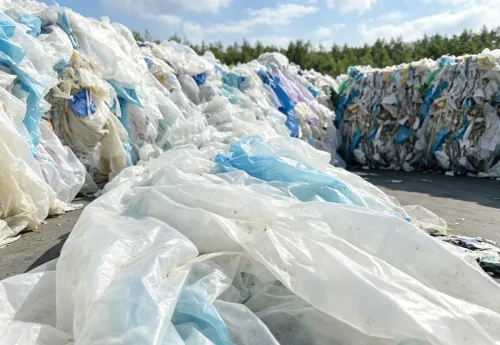
Plastic film waste—LDPE, PP, agricultural film, and stretch wrap—is generated in enormous volumes across farms, factories, and packaging lines. Yet it is highly tough and prone to tangling, which makes it one of the most difficult materials to process. A dedicated plastic film shredder turns this stubborn waste into clean, uniform pieces that downstream equipment can handle with ease.
This guide explains what a film shredder machine is, how it works, where it is used, and how to select the right model for your recycling line.
What Is a Plastic Film Shredder?
A plastic film shredder is an industrial machine designed to reduce thin, flexible plastic film into smaller fragments for recycling, washing, granulating, and densifying. Unlike general-purpose crushers, it is engineered to handle materials that wrap, cling, and wind around rotating parts.
The machine uses rotors fitted with interlocking blades that shear and tear the film rather than cut it. Depending on the model, it runs at low speed with high torque for tough, tangled film, or at higher speed for finer granulation. Either way, the tearing action prevents the material from wrapping around the shaft, producing a consistent output that feeds smoothly into the next stage.
How a Film Shredder Machine Works
The operating principle is simple but effective:
- Feeding: Film enters the cutting chamber through a hopper, either by gravity or a conveyor.
- Shearing: Counter-rotating shafts pull the film between staggered blades, tearing it into strips.
- Проверка: A screen at the chamber bottom holds material until it reaches the target particle size.
- Discharge: Shredded film exits for washing, drying, granulation, or baling.
Applications and Benefits
A film shredder machine serves multiple industries and delivers clear returns:
- Plastic recycling plants: Prepares film scrap for washing and pelletizing, improving feed consistency.
- Agricultural film processors: Handles greenhouse film and mulch film that is dirty, tough, and heavily tangled.
- Packaging waste facilities: Reduces stretch wrap, shrink film, and bags before compaction or energy recovery.
- Manufacturing lines: Recycles in-house film offcuts and rejects without interrupting production.
The benefits go beyond processing. Shredding reduces transport volume, lowers disposal costs, and turns waste into a sellable raw material.
Selection Guide
Choosing the right plastic film shredder depends on your material, output goals, and budget. Work through the factors below before you buy.
Throughput and Efficiency
- Match capacity to volume: Size the machine to your daily waste input, with a safety margin for peak periods.
- Power rating: Higher motor power handles tougher film and faster feed rates, but raises energy cost.
- Feed method: Gravity feed suits light film; a conveyor or hydraulic ram feeds bulky, tangled bales more reliably.
Screen Size and Output
- Screen opening controls particle size: Smaller holes give finer output but reduce throughput.
- Balance size and speed: Choose the smallest screen that still meets your target production rate.
- Downstream fit: Confirm the output size matches your washing, granulating, or baling equipment.
Blade Material and Design
- Hardened alloys: Hardox500 or SKD11 blades resist wear and extend service life.
- Staggered, serrated blades: Reduce film winding and improve cutting efficiency.
- Replaceable blades: Lower long-term cost and simplify maintenance.
Durability and Automation
- Heavy steel frame: Absorbs shock and supports continuous operation.
- PLC control: Monitors load and auto-reverses to clear jams.
- Sealed bearings: Keep out dust and film fibers, reducing downtime.
Cost and Maintenance
- Energy use: Compare power draw against throughput for a true running cost.
- Blade replacement: Factor in frequency and cost of spare blades.
- Ease of access: Machines with open chambers and quick-change blades cut maintenance time.
Choosing the Right Shaft Type
| Shaft Type | Best For | Feed Method | Output Size | Typical Role |
| Single shaft | Fine, consistent output | Hydraulic ram | Screen-controlled, fine | Fine shredding |
| Double shaft | Tough, tangled film | Gravity / conveyor | Coarse to medium | Pre-shredding |
| Four shaft | Uniform fine output | Gravity / conveyor | Screen-controlled, fine | Fine shredding / RDF |
Maintenance Guide
A film shredder machine runs best with a simple, consistent maintenance routine. Regular care prevents jams, extends blade life, and keeps output quality stable.
- Daily checks: Inspect the hopper and cutting chamber for wrapped film and foreign objects before each shift.
- Blade care: Rotate or replace blades when output becomes coarse or throughput drops; keep a spare set on hand.
- Смазка: Grease bearings and drive components on schedule to reduce wear and noise.
- Уборка: Clear screen openings regularly so material flows freely and particle size stays consistent.
- Safety first: Lock out power before any inspection, and never reach into the chamber while the rotor is running.
A short weekly checklist and a monthly deep inspection will prevent most breakdowns and keep your line running at full capacity.
Common Problems and Troubleshooting
Even a well-built machine can stall. Knowing the cause saves downtime:
- Film wrapping the shaft: Reduce the feed rate or add a pre-cutter; use the auto-reverse function to clear the jam.
- Blunt or chipped blades: Rotate or replace blades, and check for metal or hard contaminants in the feed.
- Motor overload: Lower the feed volume and confirm the screen size matches your target output.
- Uneven particle size: Clean the screen and check for blade gaps or worn screens.
- Excessive noise or vibration: Inspect bearings, belts, and blade balance during monthly checks.
Shengzhong Plastic Film Shredder Solutions
Shengzhong Heavy Industry Machinery builds shredders for every stage of film processing, from pre-shredding to fine granulation. Each model below targets a specific need.
A high-speed granulating machine fitted with SKD11 blades and optional screen meshes for fast particle reduction.
- High-speed granulation: Processes film, bottles, and pipes quickly and uniformly.
- Wear-resistant blades: SKD11 steel keeps cutting edges sharp for longer.
- Adjustable mesh: Optional screens control final granule size.
- Flexible duty: Works as a post-shredder or as a direct granulation unit.
- Ideal for: high-speed granulation of film, bottles, and pipes.

A compact double-shaft unit that fits tight spaces while still handling film reliably. It is the practical choice for factory film scrap and light waste on small recycling lines.

- Compact design: Saves floor space without sacrificing processing capability.
- Dual drive options: Choose single-drive or double-drive to match your power supply and budget.
- Durable build: Siemens motors and Hardox500 blades deliver dependable, low-maintenance operation.
- Easy integration: Pairs easily with conveyors and granulators for a simple in-house line.
- Ideal for: factory film scrap, light waste, and small recycling lines.
A hydraulic-fed fine shredder that uses a screen to control particle size with quiet, stable operation.
- Screen-controlled size: Delivers consistent output for precise downstream requirements.
- Low noise: Quiet operation suits indoor and noise-sensitive facilities.
- Hydraulic feed: Handles film reliably and maintains a steady throughput.
- Stable output: Ideal for lines where consistency and uptime matter most.
- Ideal for: fine shredding with low noise and consistent output.

The heavy-duty workhorse of the film recycling line, built for tough, tangled film and bulky bales.

- Low-speed, high torque: Shears film without wrapping, even with heavily tangled input.
- PLC control: Monitors load and auto-reverses to clear jams and protect the rotor.
- CE certified: Meets European safety and quality standards for export use.
- Robust frame: Heavy steel construction extends service life under continuous operation.
- Ideal for: tough, tangled film, bulky bales, and high-volume feed.
Adds a second pair of shafts and a screen to deliver fine, uniform output for strict particle-size requirements.
- Finer output: Produces consistent, screen-controlled fragments for downstream processing.
- Versatile sizing: Screen options let you adjust particle size to your exact needs.
- Better for RDF: Meets the size demands of washing, granulation, and refuse-derived fuel.
- Lower energy per ton: Efficient cutting geometry reduces power consumption.
- Ideal for: fine, uniform output and strict particle-size requirements.

Заключение
Plastic film is difficult to handle, but the right plastic film shredder machine turns that challenge into a reliable, profitable recycling stream. Match the machine to your material, output size, and capacity, and you will cut costs while improving product quality.
Ready to upgrade your film recycling line? Contact us for a tailored recommendation and a quote. Our engineers will help you select the right shredder and design a complete system around it.


