
 Arabic
 English
 Russian
 Thai
 Korean
 Chinese
 Japanese
 Vietnamese
 Malay
 Tamil
 Turkish
 Portuguese
 Indonesian
 French
 Spanish
Investing in a heavy-duty straw shredder machine has become a critical necessity for modern agriculture and biomass industries looking to manage massive volumes of crop residues efficiently. Large amounts of bulky agricultural waste, particularly rice and wheat residues, require immediate, systematic size reduction to facilitate logistical transport, clean energy production, or field recycling. Integrating this robust infrastructure into the production line remains essential to maintaining optimal operational speed, controlling dust hazards, and minimizing manual overhead. This technical guide evaluates the standard configurations of raw material processing, outlines the primary mechanics of high-torque volume reduction, and introduces the industrial-grade solutions developed by Shengzhong Heavy Industry Machinery to meet high-volume processing standards.
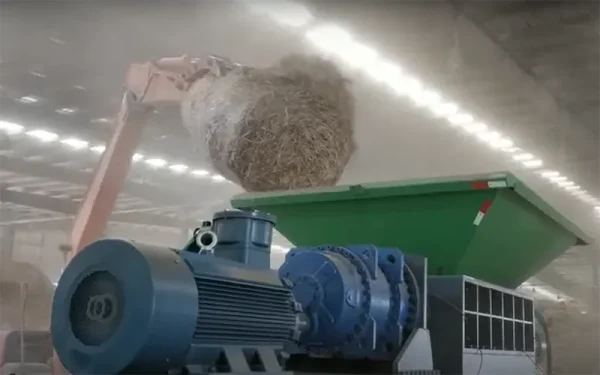
Understanding the Straw Shredder Machine
A straw shredder machine is specialized industrial equipment designed to cut, shear, and downsize bulk agricultural residues into uniform, manageable fractions. Depending on regional agricultural practices and specific processing requirements, this machinery is known by several industry terms. In major rice-producing territories where post-harvest field management is vital, it is widely referred to as a paddy straw shredder or a paddy straw shredder machine. Conversely, when facilities manage tightly packed, high-density storage units, the equipment is termed a straw bale shredder.
Regardless of the nomenclature used, the primary objective of the machine remains constant: to break down highly fibrous, resilient material structures that resist natural decomposition and standard mechanical compaction. Traditional disposal methods, such as field burning, create significant environmental liabilities and waste valuable biomass resources. Utilizing a heavy-duty آلة تقطيع القش allows agricultural enterprises and biomass plants to convert loose or baled straw into structured raw materials ready for immediate pelletizing, composting, power generation, or livestock bedding.
Product Recommendation —— Shengzhong Straw Shredder for Sale
Shengzhong Heavy Industry Machinery, an established leader in agricultural biomass recycling innovation, specializes in the research, development, and manufacturing of high-capacity آلة تقطيع القش infrastructure. Engineered explicitly for severe agrarian and industrial environments, our heavy-duty processing systems deliver exceptional mechanical efficiency and long-term durability for continuous size reduction.

Working Principle and Operational Framework
The Shengzhong straw shredder machine utilizes a low-speed, high-torque shredding mechanism engineered specifically for continuous, dust-free processing of agricultural biomass. When bulk crop residues or compressed bales enter the hopper, two parallel shafts equipped with precision-machined alloy blades rotate slowly in opposite directions at 20 to 40 RPM. This counter-rotating action applies intense tensile and shear stresses to fracture tough straw fibers at their weakest links, ensuring uniform size reduction with minimal power consumption and low operating noise. To prevent common processing interruptions, the specialized geometry of the knives eliminates material wrapping and winding around the shafts. Furthermore, the entire system is governed by an intelligent PLC. If non-shreddable tramp metal or a severe material overload enters the chamber, the controller instantly triggers an automatic reverse sequence to clear the obstruction, protecting the drive components before seamlessly resuming forward operation.
Key Technical Characteristics and Structural Advantages
- Robust Structural Integrity: Built upon a massive, heavy-duty frame constructed from thick, high-tensile steel plates. This structural mass absorbs operational vibrations and withstands the mechanical stresses of high-capacity continuous feeding.
- Low-Speed, High-Torque Performance: The shafts rotate at a measured pace of 20 to 40 RPM. By prioritizing high torque over rotational velocity, the machine optimizes energy conservation, minimizes component wear, and provides a safer, quieter working environment.
- High Size Reduction Efficiency: Rather than relying on simple compressive force, the blades apply precise tensile and shear stresses. This mechanism fractures the straw fibers at their weakest points, delivering large-scale volume reduction with lower energy use.
- Advanced Self-Cleaning Dynamics: The counter-rotating design ensures the rollers continuously clear material from one another. Wet, sticky, or highly fibrous fractions that typically clog single-shaft units are cleared automatically without manual operator intervention.
- Automated Mechanical Safety: Integrated electronic sensors continuously monitor motor loads. The automated reverse function protects the gearbox, shafts, and electric drive motors from catastrophic failure caused by uncrushable materials.
- Simplified Maintenance Regimen: Engineered with fewer moving parts than traditional complex shredding systems. The wear-resistant alloy blades can be serviced or replaced individually, and the heavy-duty shaft bearings are completely isolated from the cutting chamber to prevent dust contamination.
- Pre-Shredding Versatility: Excellent for use as a primary, first-stage processing unit to break down high-density agricultural bales into loose, loose-flowing chunks optimized for downstream sorting, drying, or pelletizing lines.
Technical Parameters and Specifications Table
| نموذج | قطر الشفرة | الطاقة الكلية | سرعة |
| سز-بي600 | 230-350 ملم | 22-70 كيلو وات | 10-20 |
| سز-بي800 | 270-400 ملم | 44-90 كيلو وات | 10-20 |
| سز-بي1000 | 300-400 ملم | 44-90 كيلو وات | 10-20 |
| سز-بي1200 | 300-600 ملم | 60-180 كيلو وات | 10-20 |
| سز-بي1400 | 400-600 ملم | 90-220 كيلو وات | 10-20 |
| سز-بي1600 | 500-650 ملم | 110-264 كيلو وات | 10-20 |
| سز-بي1800 | 500-700 ملم | 110-320 كيلو وات | 10-20 |
Industrial Applications of the Double Shaft Straw Shredder
The structural flexibility and high-torque cutting capabilities of the Shengzhong double shaft straw shredder allow it to serve multiple industrial, environmental, and energy generation sectors globally.
Primary Applications in Agricultural Waste and Biomass Processing
Within agricultural supply chains, the equipment serves as the primary processing interface for raw materials. Large biomass power plants utilize the paddy straw shredder machine to reduce bulky material into uniform dimensions, guaranteeing a steady, continuous feed for boiler systems and ensuring complete combustion.
Similarly, in large-scale pellet production, the straw bale shredder processes densely packed bales efficiently, reducing processing time and preparing the fiber for secondary fine grinding and extrusion. This efficient breakdown supports regional composting operations and large-scale animal husbandry facilities requiring standardized bedding materials.


Extended Capabilities in Multi-Material Recycling and Waste Management
Beyond agricultural straw, the double shaft architecture is highly effective across a broad spectrum of industrial, commercial, and municipal waste materials. The shear-based cutting mechanism processes diverse waste streams with equal efficiency, making it an excellent investment for multi-category processing centers. Key extended applications include:
- Municipal Solid Waste (MSW) and Bulky Items: Processing large household items, furniture, mattresses, and blended organic wastes to minimize landfill volume or prepare Refuse-Derived Fuel (RDF).

- Industrial Plastics and Commercial Packaging: Easily shredding thick-walled plastic drums, purging materials, plastic pallets, stretch wraps, crates, and high-density packaging containers.

- Electronic Waste (WEEE): Pre-shredding discarded household appliances, computer housings, circuit boards, and consumer electronics to simplify downstream mechanical metal sorting and precious metal recovery.

- Scrap Wood and Forestry Residues: Pulverizing logistics pallets, wooden crates, construction timber, tree branches, stumps, and bark into high-quality wood chips or boiler fuel.

- Textiles, Fibers, and Flexible Materials: Processing bulk carpets, industrial garments, woven bags, synthetic fiber bundles, and leather scraps without material binding or wrapping.

Key Considerations When Selecting a Straw Shredder Machine
Choosing the right industrial processing infrastructure requires a careful evaluation of your specific operational inputs and daily production goals. To ensure you invest in a آلة تقطيع القش that delivers optimal long-term ROI, consider the following technical factors:
- Material Form and Moisture Content: Loose, fresh field residues require different hopper and blade configurations compared to high-density, tightly wrapped biomass bales. Ensure the machine torque and feed opening are rated for your specific material packaging.
- Target Output Size: Your downstream processes dictate your sizing needs. If you are preparing material for direct boiler combustion, a primary coarse grind is sufficient. However, for pellet production or precise briquetting, choose a system that can consistently meet finer technical specifications.
- Capacity and Scalability: Calculate your daily tonnage requirements to choose the correct motor power and chamber dimensions. Selecting a machine with a slightly higher throughput ceiling prevents constant near-overload operations and extends component lifespan.
- Control and Automation Requirements: For high-volume settings, standard manual controls increase labor costs and machine downtime. Prioritize systems equipped with smart PLC auto-reverse features to autonomously handle foreign metal or material jamming without operator intervention.
خاتمة
Investing in a reliable straw shredder machine is essential for processing facilities looking to control operational costs, mitigate dust hazards, and secure continuous plant throughput. Shengzhong Heavy Industry Machinery provides robust engineering, intelligent PLC monitoring, and wear-resistant alloy cutting configurations designed to optimize processing efficiency. Contact our technical application team today to configure an industrial system tailored to your production demands.


